Tina Douglas
art
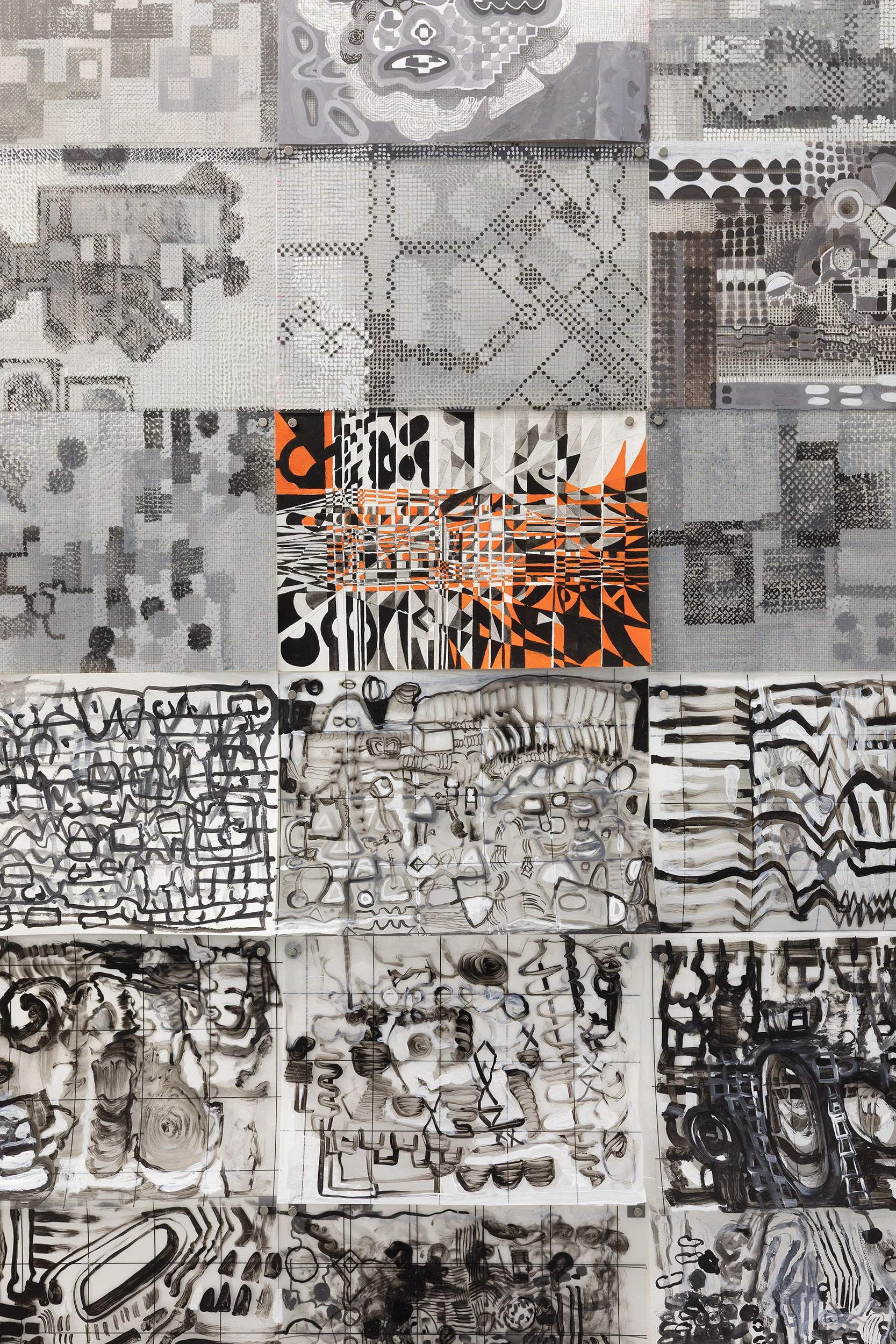
Five Walls, Foostcray 2026
Tina Douglas
Trying to Touch the Grass 2026
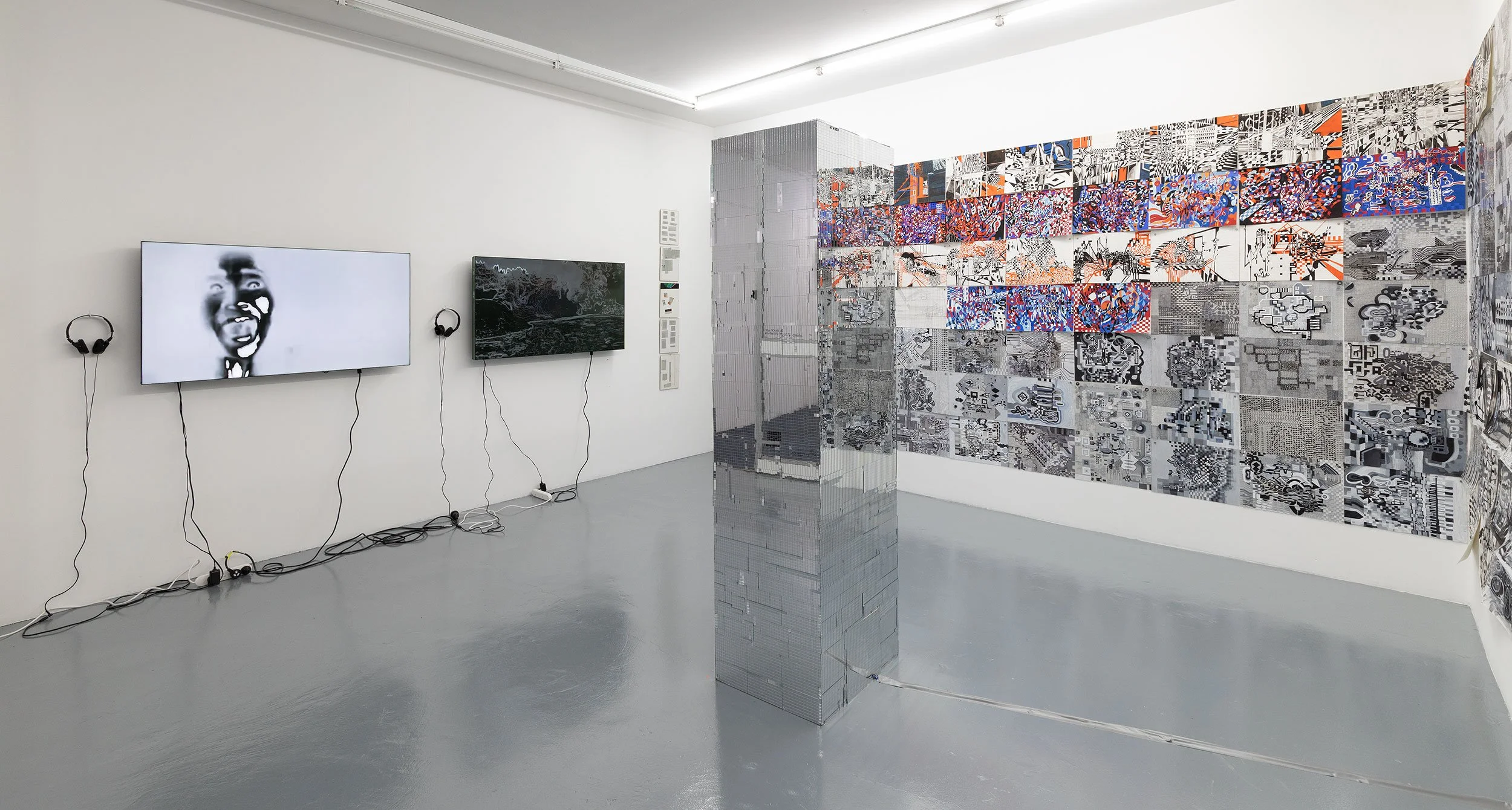
An exhibition of three works.
Contemporary life is a condition of managed disorientation. We move through physical space while inhabiting digital ones, scroll through crises and advertisements with the same gesture, and carry in our pockets architectures of attention more total than any wall.
Trying to Touch the Grass takes its title from internet vernacular’s dismissive command — go outside, reconnect with reality — and asks why that has become so difficult, and what it costs us that it has.
The three works in this exhibition approach that question through different registers: immersive installation, archival excavation, and visceral accumulation. Together they trace a genealogy of fragmentation — from the cut-up experiments of the 1960s counterculture, through the noise and violence of the early internet era, to the algorithmic feeds that now structure daily consciousness.
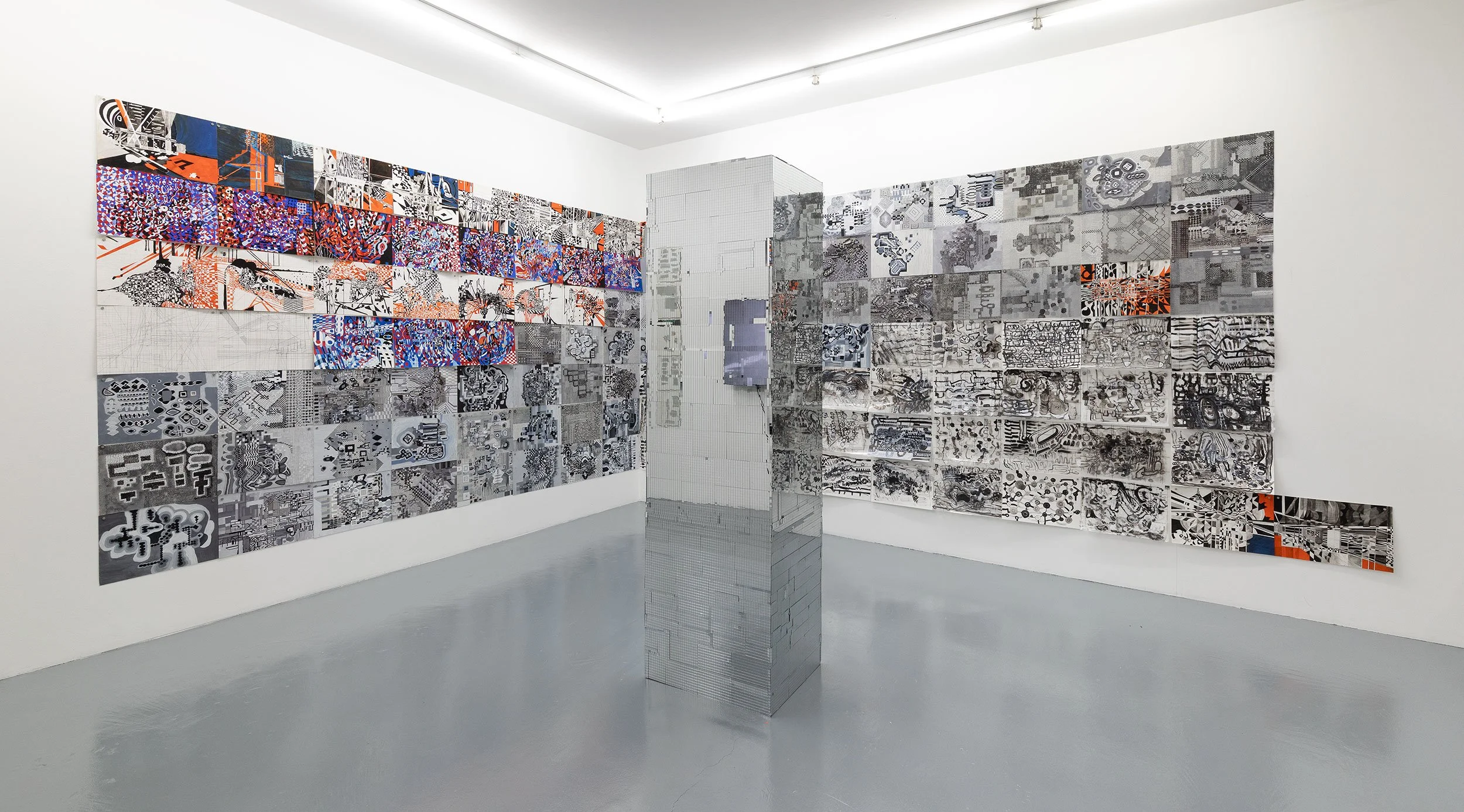
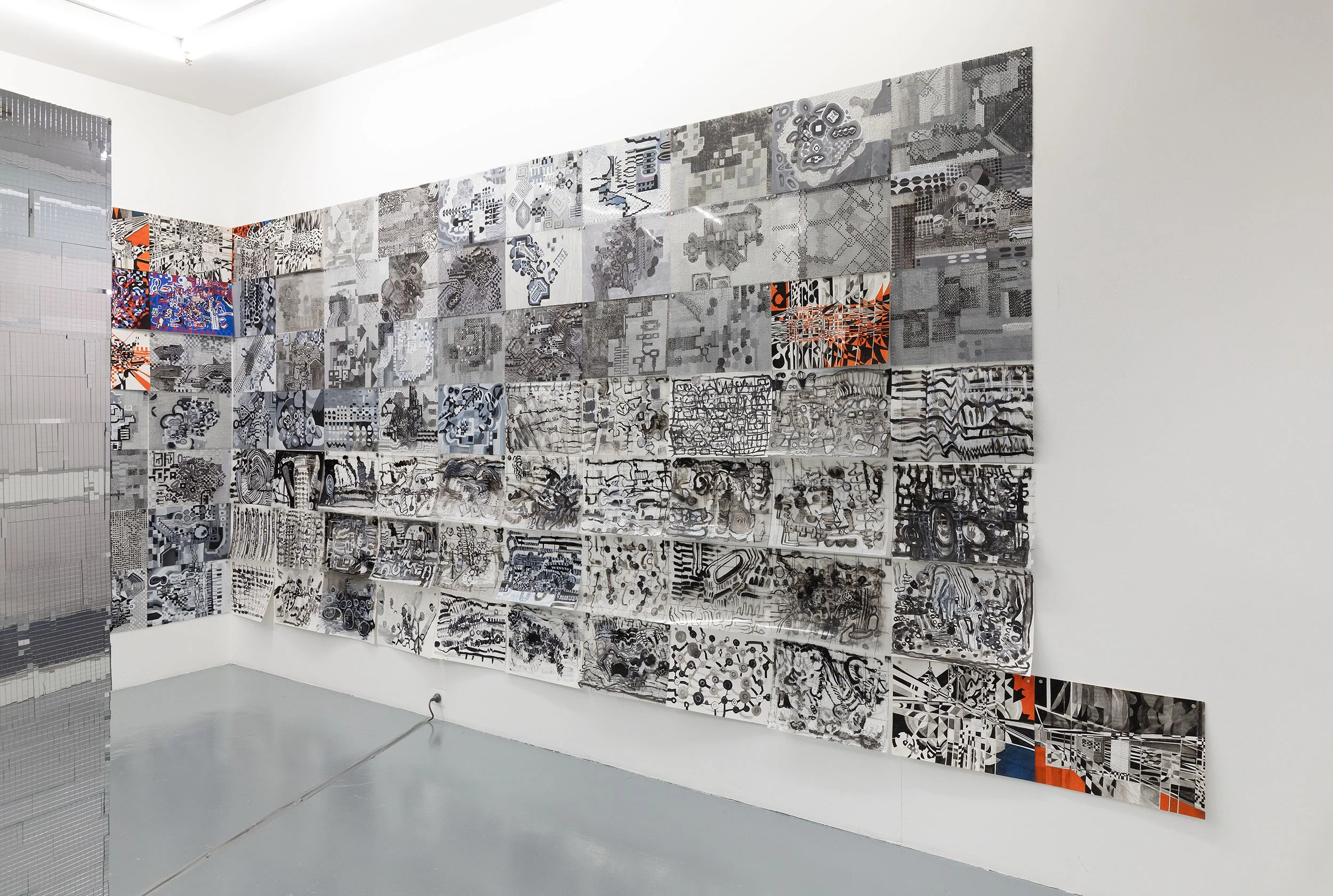
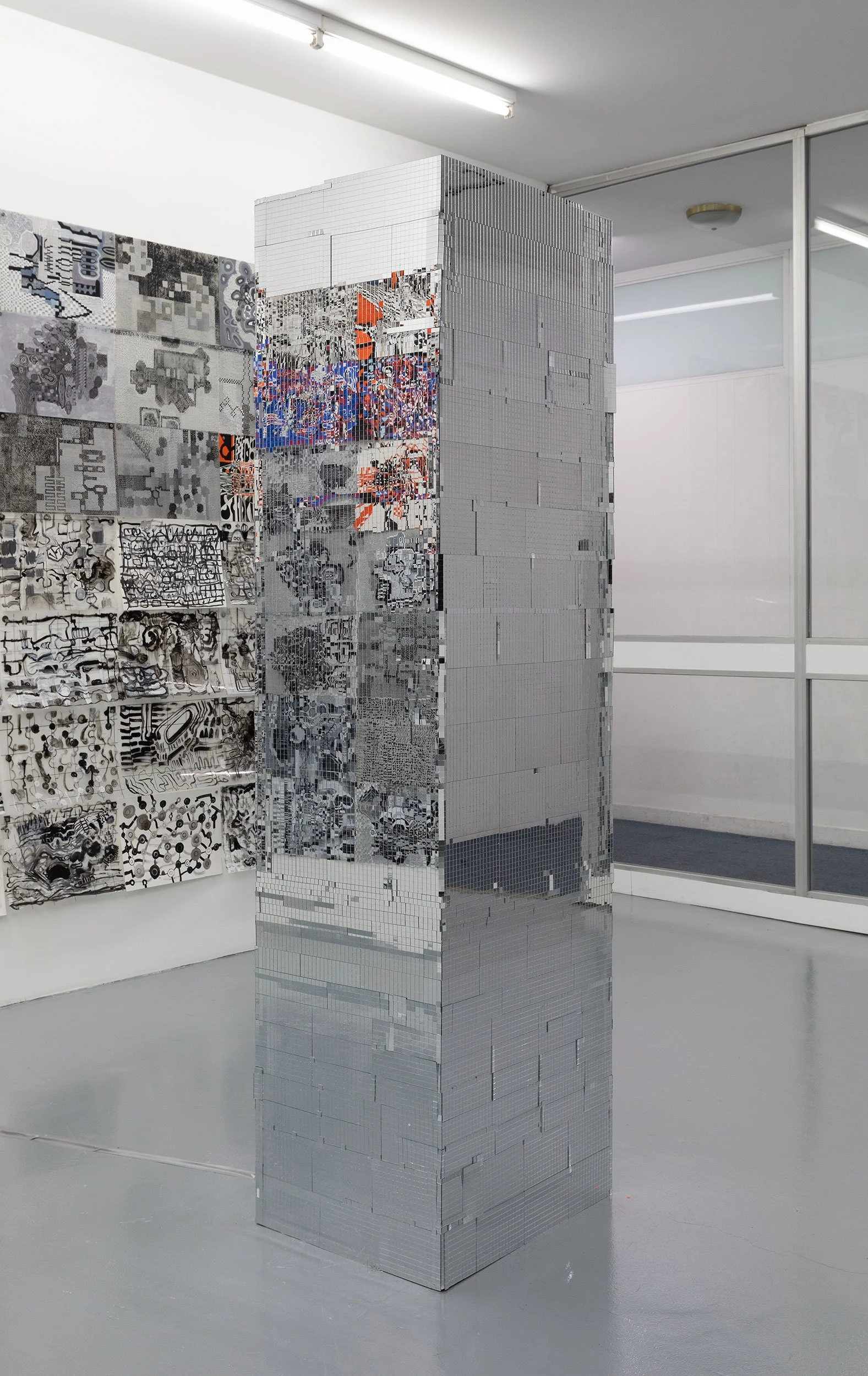
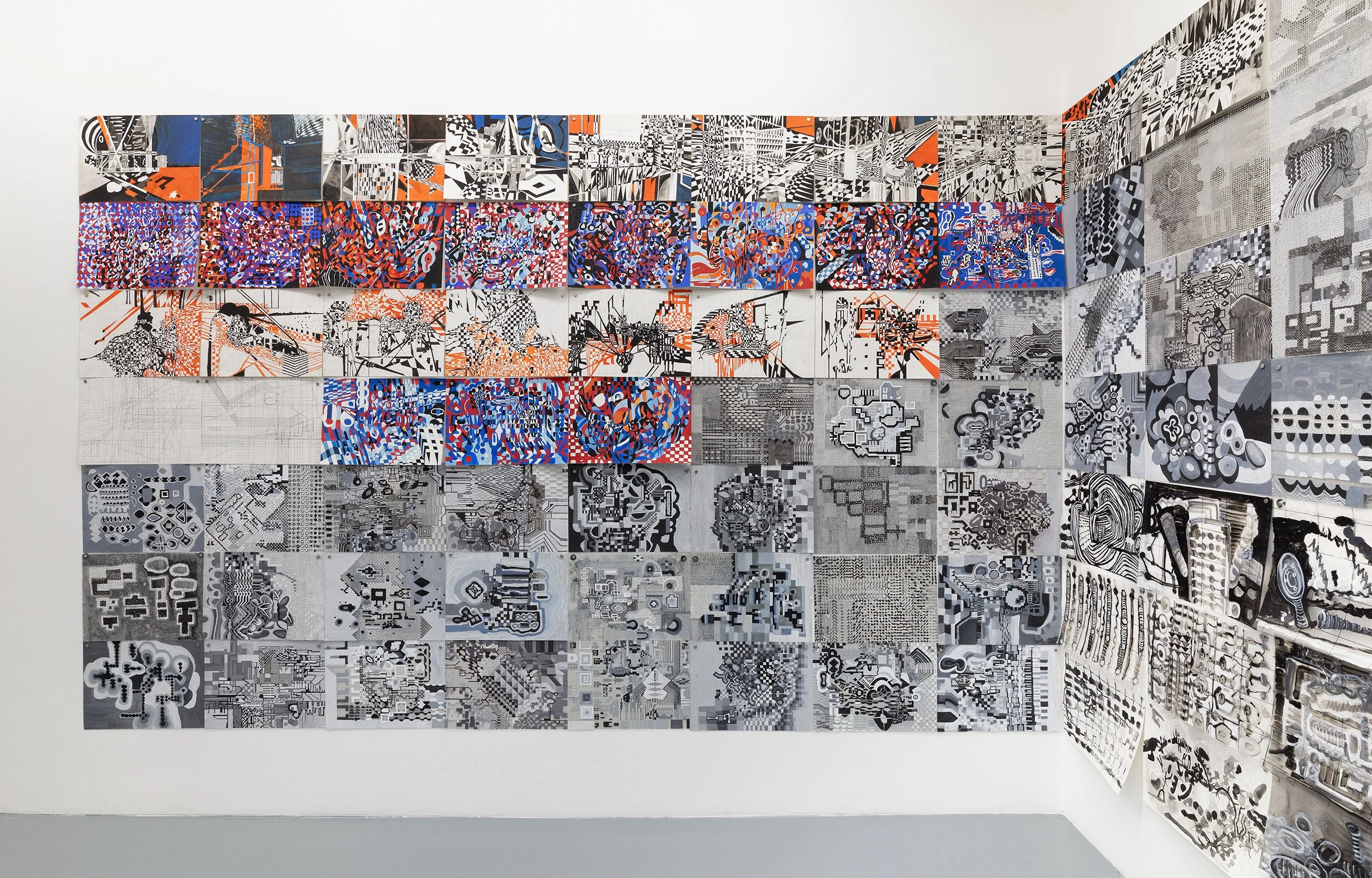
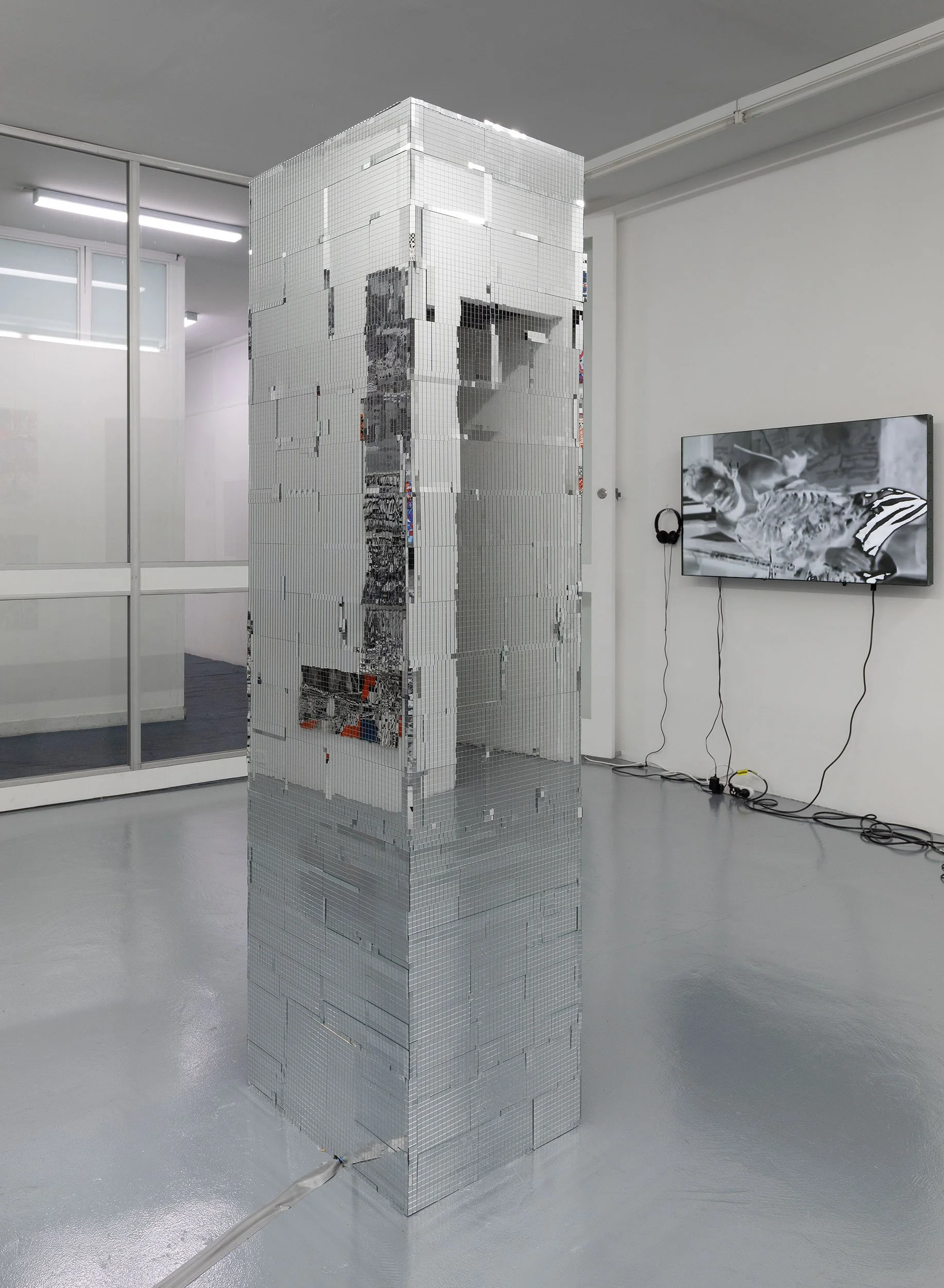
cell 2026
paper, acetate, gouache, acrylic, mirror tiles, magnets, cardboard, timber, sound, media player, speaker
Dimensions variable
Made up of:
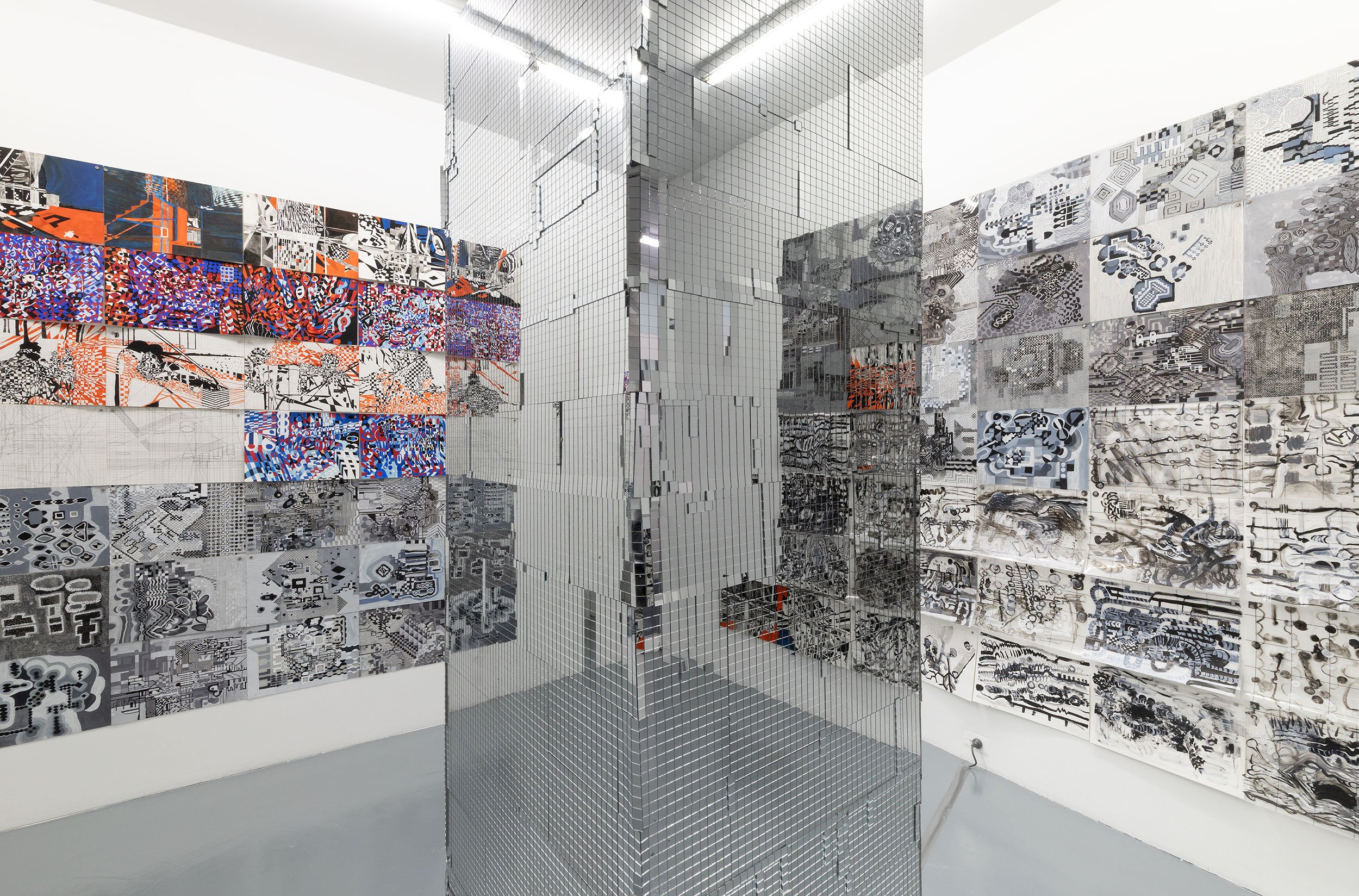
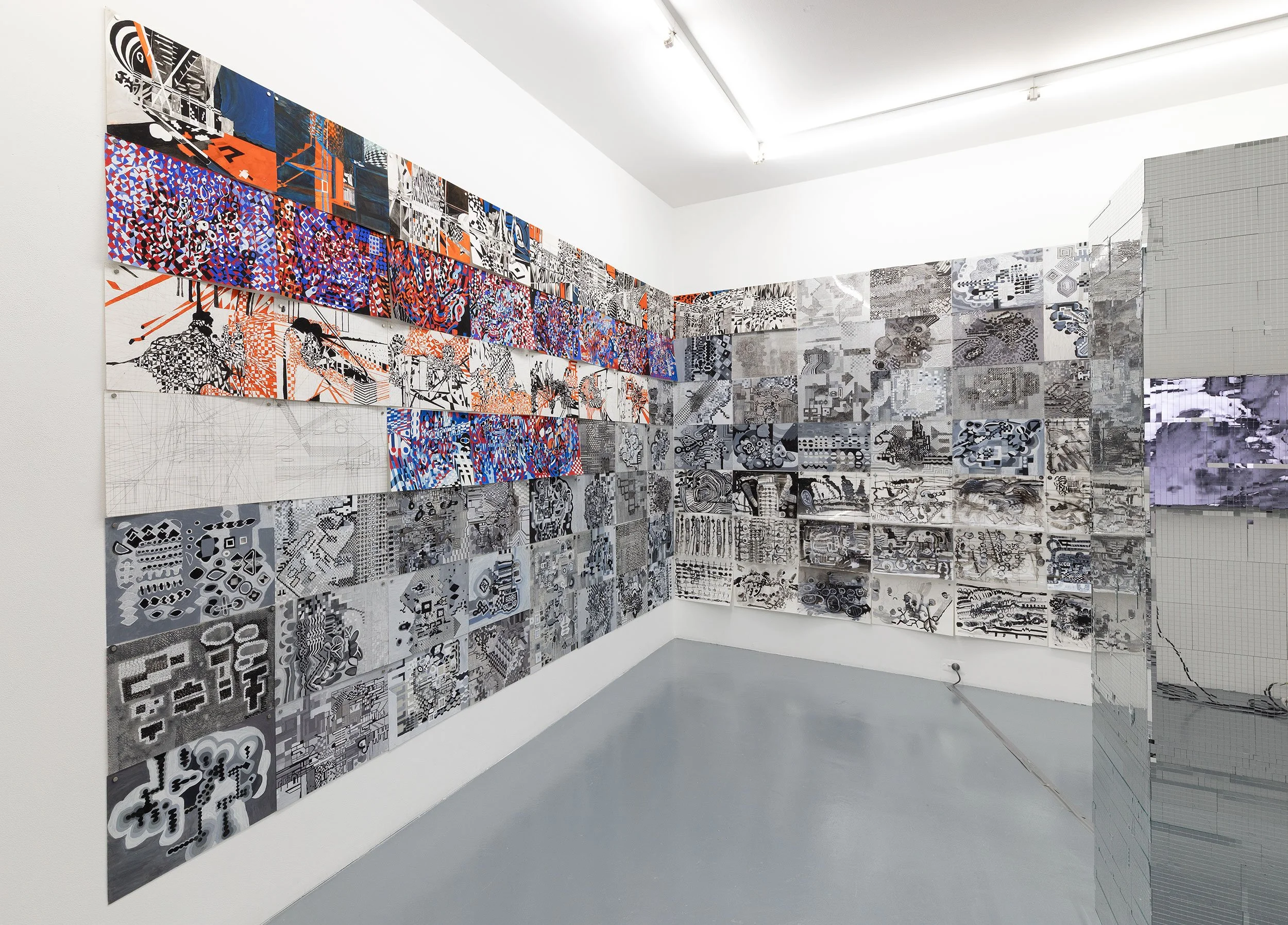
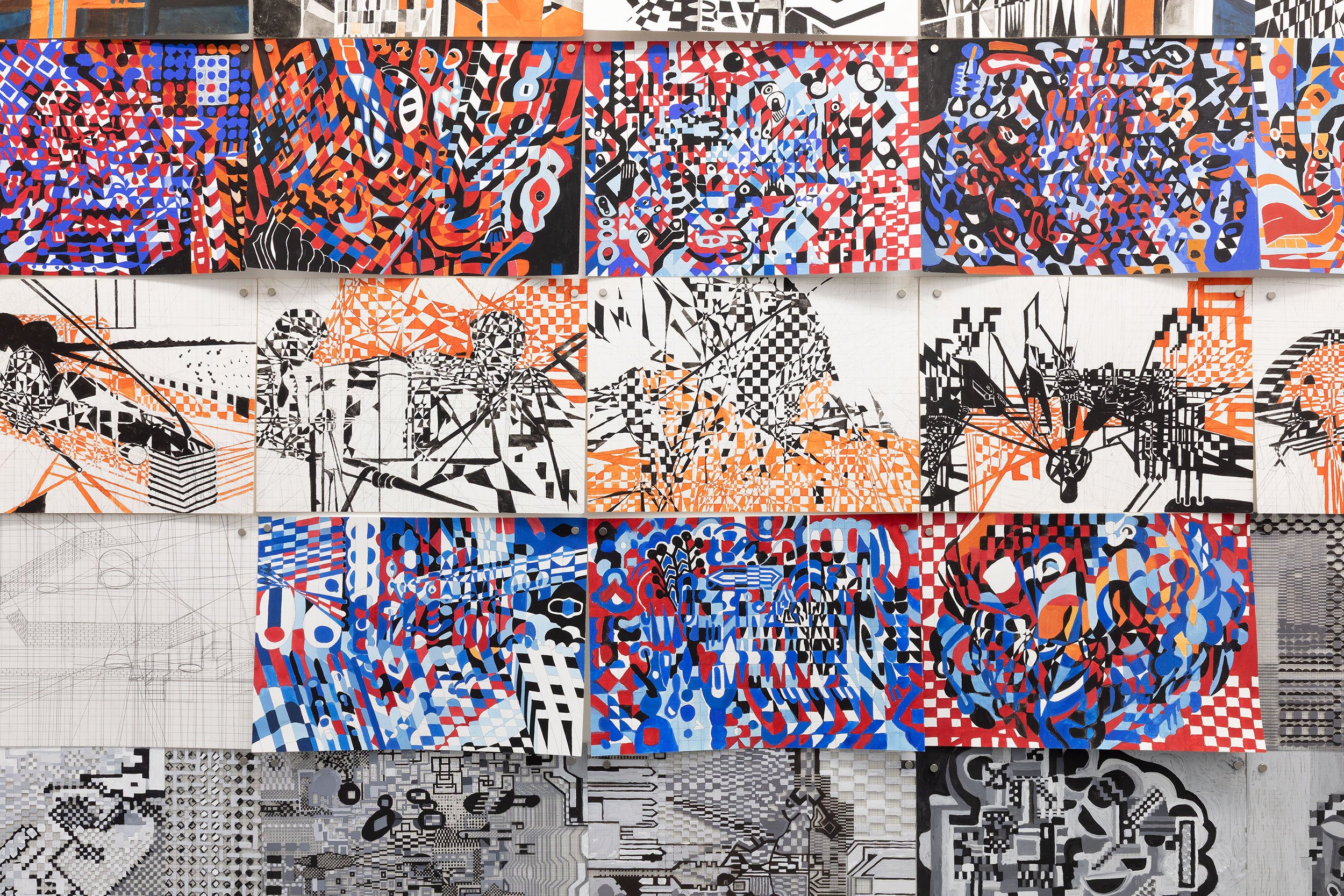
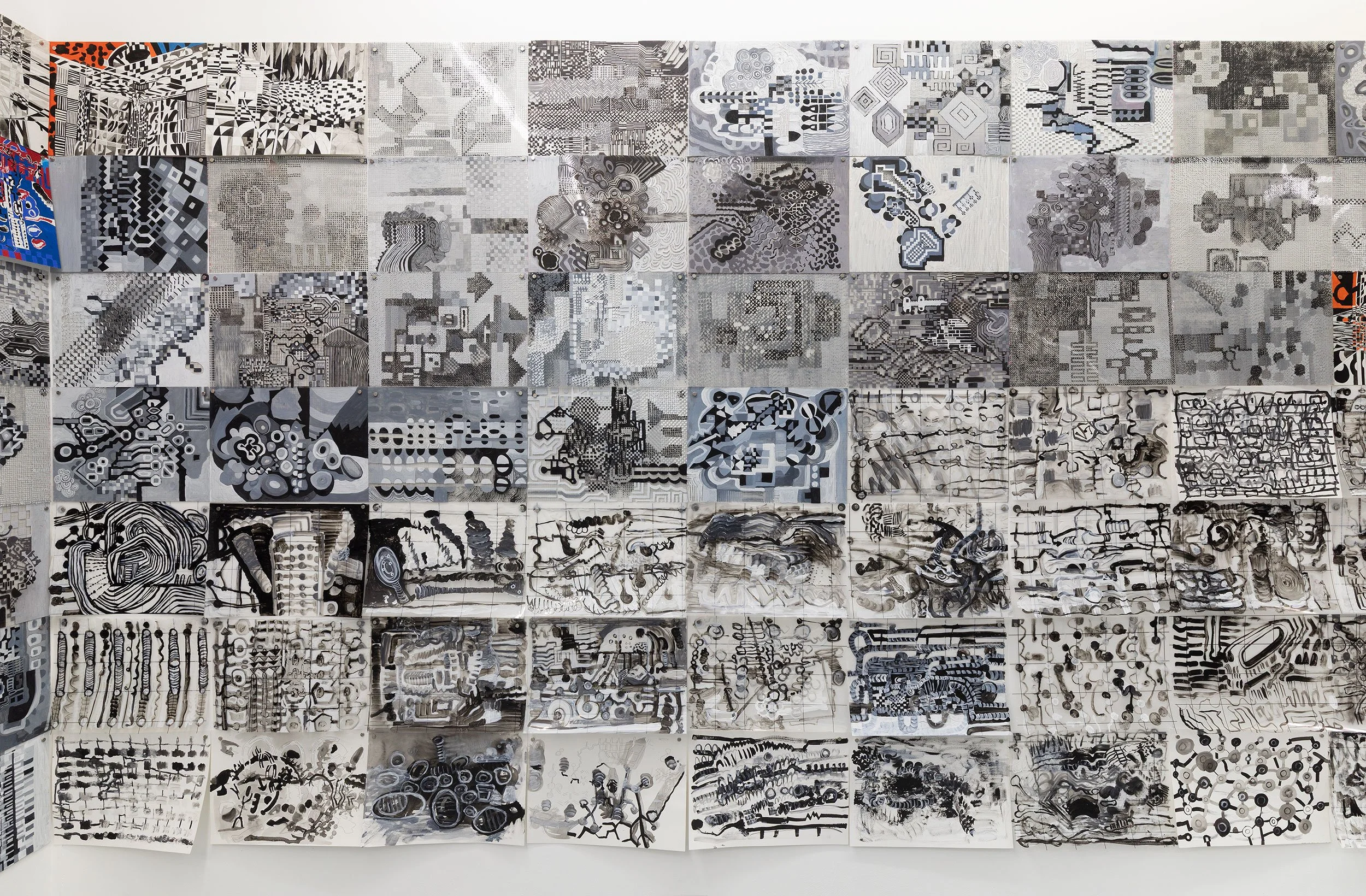
128 paintings, each 297 x 42 cm
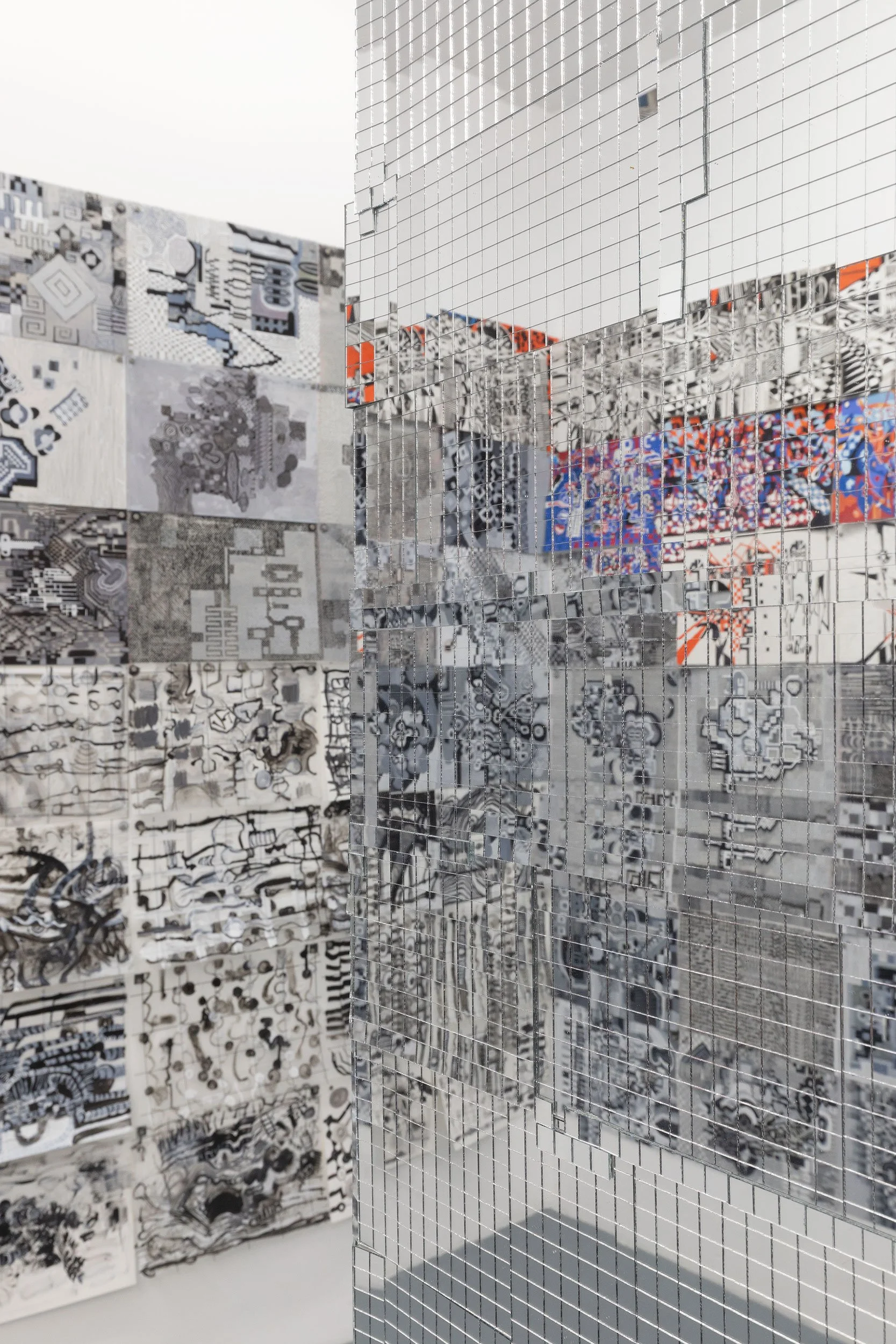
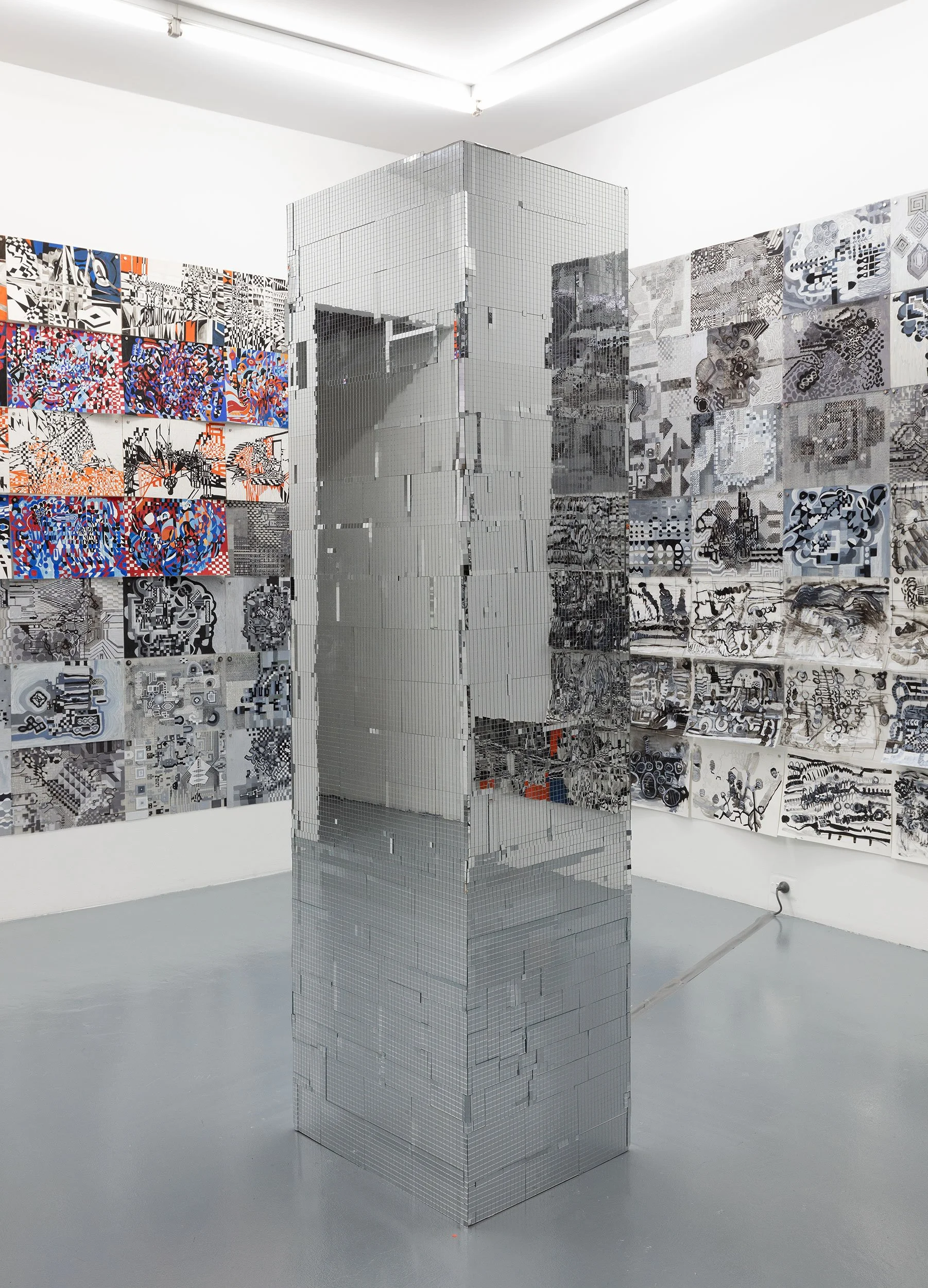
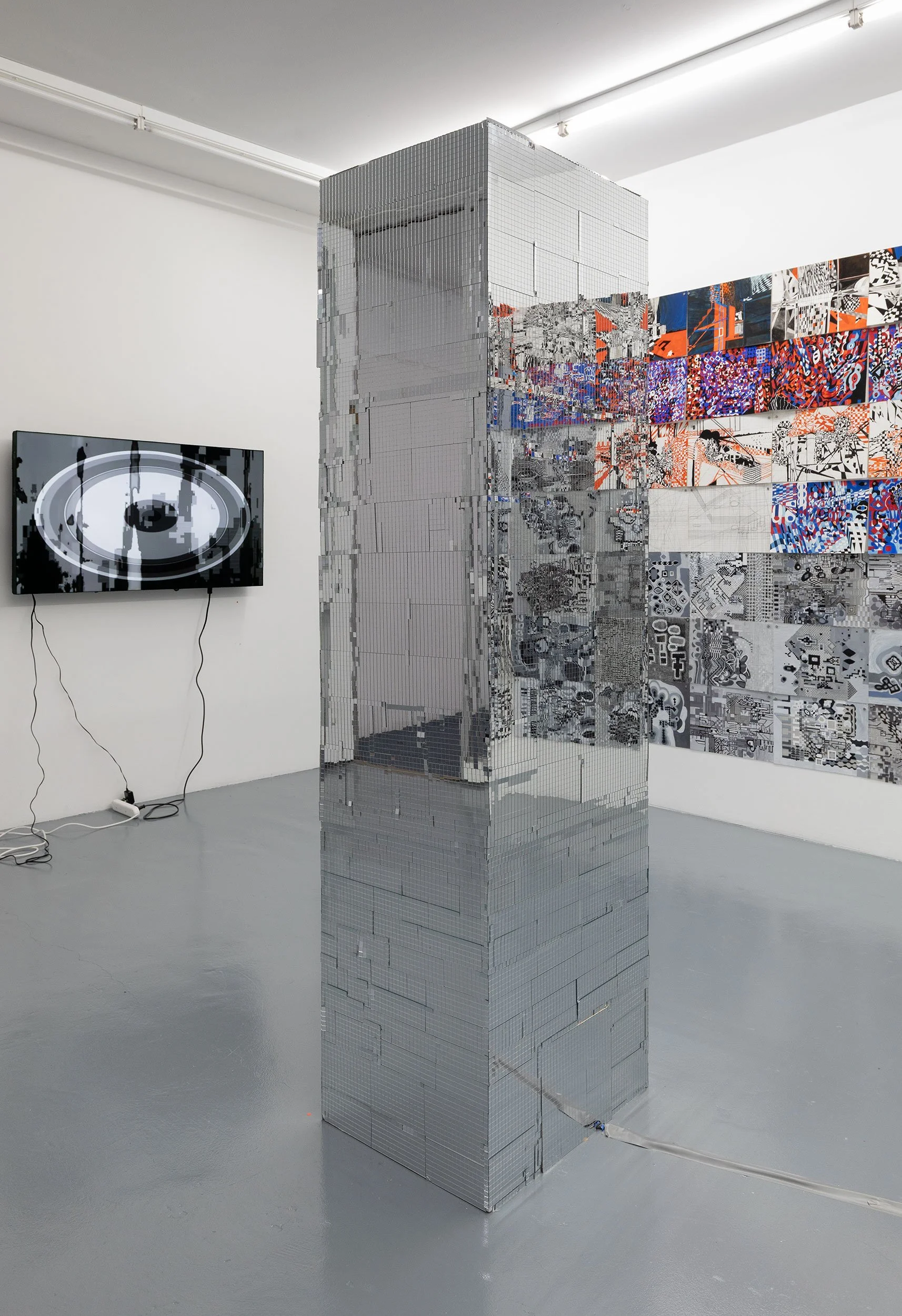
Mirror column with sound loop, 200 x 60 cm x 60 cm. 24 min. sound loop
Originally part of Her Majesty’s Prison (To remove the armour and expose the skin beneath)’, a a site-specific collaboration by The Tennant Creek Brio and Tina Douglas, Peter Webster at Old Beechworth Gaol, Beechworth as part of the 2026 Beechworth Biennale.
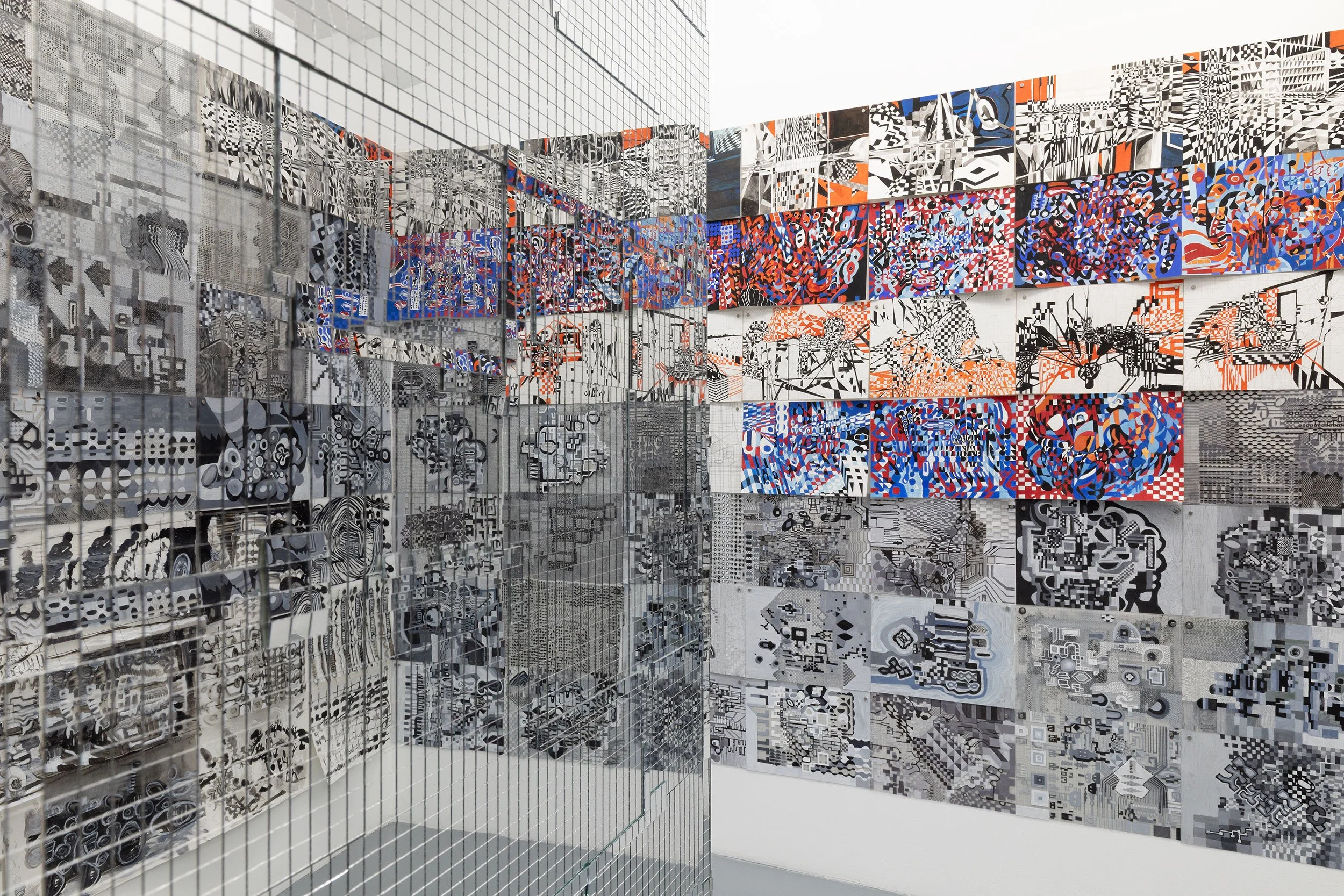
At the center of the cell stands a vertical column of mirror tiles. It does not reflect you back whole.
The surrounding walls are densely collaged with abstract painted panels — geometric patterns, optical distortions, fragmented imagery — a visual analogue to the ceaseless deluge of the digital feed. Yet within the abstraction, architectural forms surface and dissolve: floors, doorways, windows, interior fragments that suggest domestic space without ever cohering into rooms. These are the bedrooms and living rooms where compulsive scrolling most often occurs — private spaces reduced to backdrop, four walls barely registered behind a glowing screen.
The paintings function as a kind of impossible architecture. Perspective warps, spaces fold into one another, the domestic becomes labyrinthine. The palette enacts its own argument: vibrant reds, blues, and oranges gradually cede to monochromatic grey, mirroring the numbing that accompanies prolonged screen exposure and the slow recession of physical reality.
From within the mirrored column, sound plays softly — the audio of actual Instagram scrolling sessions, recorded in the intimate register of a phone held close. Taps and swipes layer beneath fragments of music, dialogue, advertisement, and personal confession, all blurring into one another. A business selling wellness products bleeds into someone’s vulnerable disclosure; a music track cuts into corporate messaging; intimate moments become indistinguishable from branded ones. Public and private collapse into a single undifferentiated stream.
By making audible what is usually experienced in solitude, the work exposes the dissociative quality of our engagement — the trance we’ve normalized. The mirror returns not a unified self but a shattered, multiplied one: fitting for a moment when truth itself feels subject to edit, when governments contradict blatant evidence, and when deepfakes and algorithmic manipulation erode the ground beneath perception. How do we discern what is real when authentic expression and calculated content arrive through the same channel, in the same format, at the same hypnotic rhythm?
cell asks what it means to be imprisoned when the cell is one, we carry in our pockets, the bars are made of light and sound, and we have forgotten what earth feels like beneath our feet.
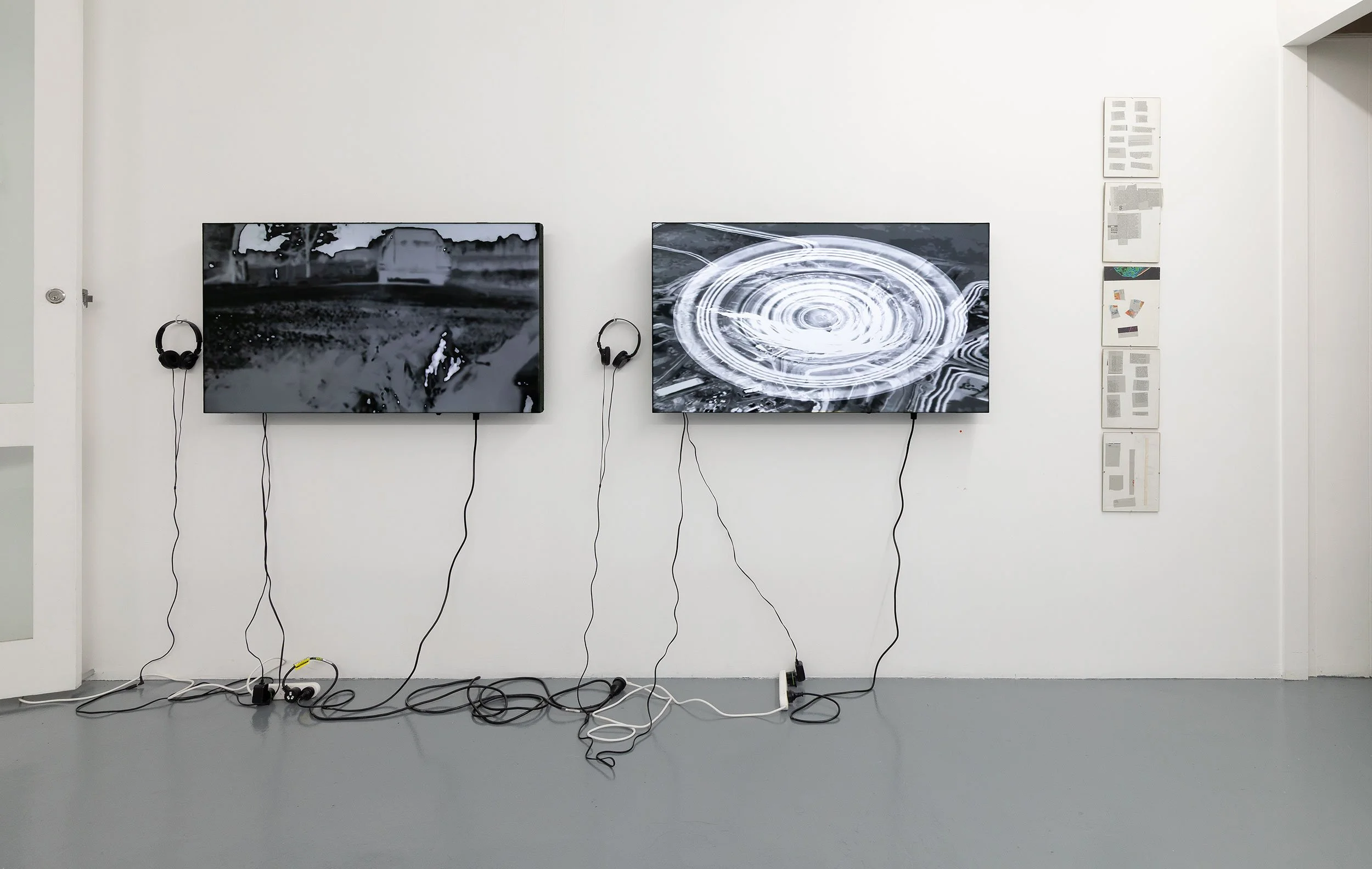
Cut up 2026
1 channel video, stereo sound, LCD screen, media player, headphones
10:48 minute loop
A video assembled from internet-scraped footage, distorted, fragmented and lo-fi-ed through cut-up technique.
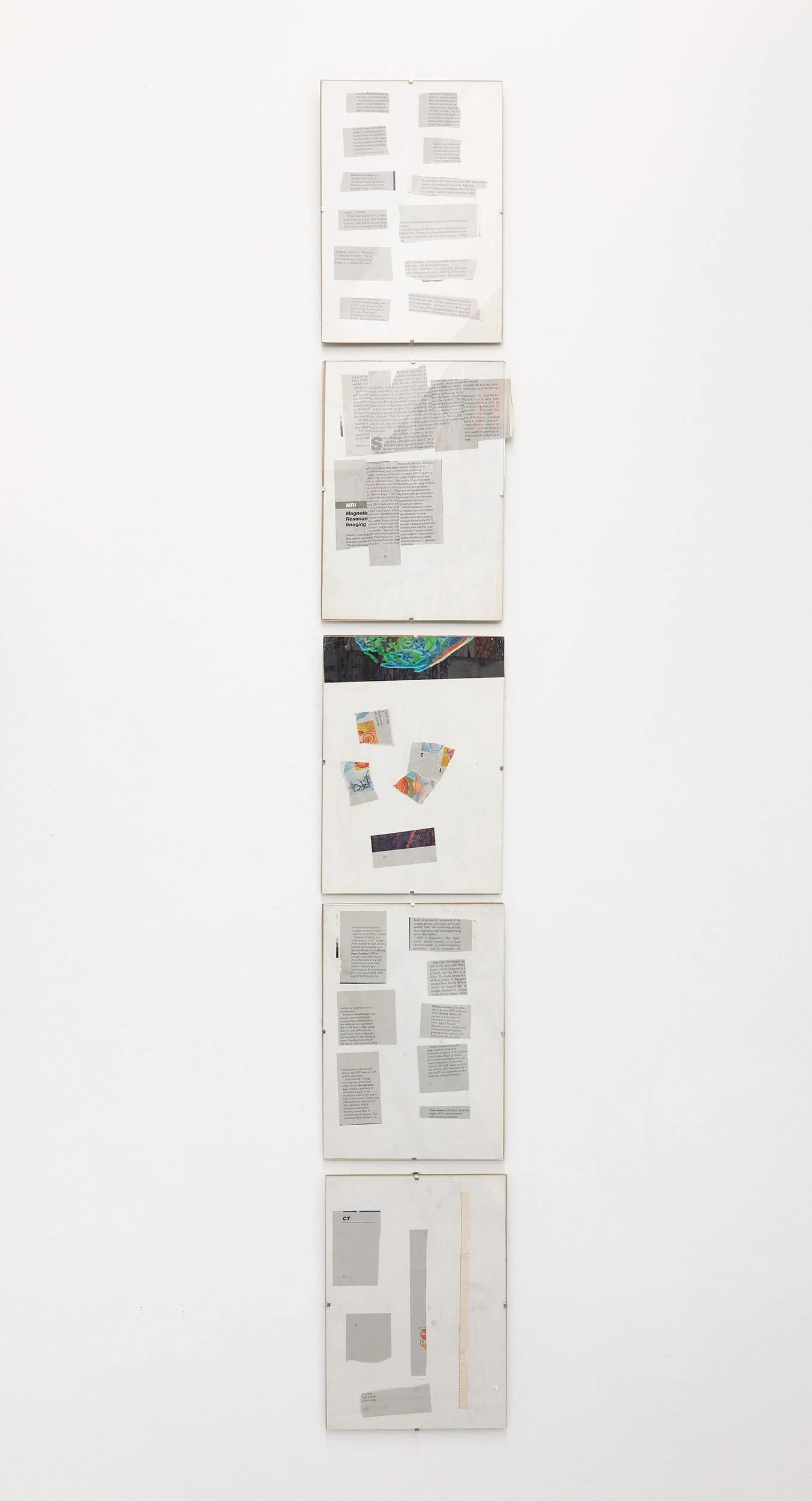
The work returns to 1993 and a first encounter with William Burroughs and Brion Gysin’s cut-up methods — their propositions about time, space, and the malleability of meaning. A recording made then forms the archival core: a collaboration with art lecturers Robert Jacks and Bernard Ollis, in which sentences cut from Scientific American were read aloud at random, then layered with shortwave radio and Morse code. The irrational set against scientific reason. The random against method.
Into this, decades of accumulated sound have been woven. Recordings made in 1993 at the artist’s family farm in Lemnos, near Shepparton — sheds banging, horses stomping, the texture of rural nights — carry an irrationally ominous quality that resisted easy explanation at the time.
Experiments with small microphones placed on the body and in the ocean, made in 2000, add another register of intimacy and submersion.
Resampled horror and suspense film soundtracks run beneath it all, amplifying the sense of dread already latent in ordinary sound.
What Burroughs understood — that the cut-up doesn’t distort reality so much as reveal the cuts already there — feels newly urgent. The algorithmic feed is a cut-up engine, and we live inside it.
100 ways to die 2026
1 channel video, stereo sound, LCD screen, media player, headphones
16:22 minute loop
Originally created in 2008, this video work is a cut-up constructed from scenes of violence and death drawn from pre-2000s horror cinema — a period defined by a particular physicality of destruction.
Before digital compositing smoothed away the seams, screen violence carried a visceral, almost handmade quality: prosthetic wounds, practical effects, squibs and fake blood, the lurching unreality of stop-motion gore. These were deaths you could feel the labour behind. The films raided here — slashers, exploitation features, body horror — existed in a cultural moment when violence onscreen still carried a charge of transgression, before overexposure dulled the nerve endings of an audience.
This work was made as a visual score for noise band Holy Boner to improvise against — a deliberate collision between two traditions of organized chaos. Noise music, like the cut-up form itself, works through accumulation and overload: signal pushed past the threshold of meaning until it becomes texture, duration, pressure. The footage operates the same way. Stripped of narrative context, the scenes are reduced to pure horror and method — death abstracted from story — until the relentless accumulation tips into the absurd.
The edit mimics the logic of the early internet: the lurch from clip to clip, the flattening effect of the playlist, the way the web began collapsing hierarchies of experience so that the shocking and the banal could sit side by side with equal weight and zero consequence.
This was, after all, the era in which that flattening first became possible at scale. The late 1990s and early 2000s saw the emergence of shock sites, forums, and file-sharing communities where footage of real and staged violence circulated freely, stripped of source and context — the same logic the cut-up enacts, but now happening to actual culture in real time.
The horror film archive, once mediated by rental shelves and age certificates, was dissolving into an undifferentiated stream. 100 ways to die arrives at precisely this threshold moment, looking back at analogue carnage through a lens already shaped by networked exposure.
The work has since been revisited with a new soundtrack and video treatment, returning to its themes to reflect on the condition of contemporary life: the unrelenting bombardment of violent imagery and the raw exposure that comes with it. What once required a video store and a taste for the transgressive now arrives unbidden — in feeds, in headlines, in footage from conflict zones rendered at the same resolution as everything else. The absurdity the original work arrived at through accumulation is now simply the ambient register of daily attention. The noise has not stopped. It has become the background.
Read Review by Christopher Heathcote on Substack
Read Review by Chistiopher Heathcote (PDF)
Read Review by Rhonda Dredge on Substack